From the Mat to Lincoln Center: March at Lauren’s Vibe Pilates

Updated: Mar 5
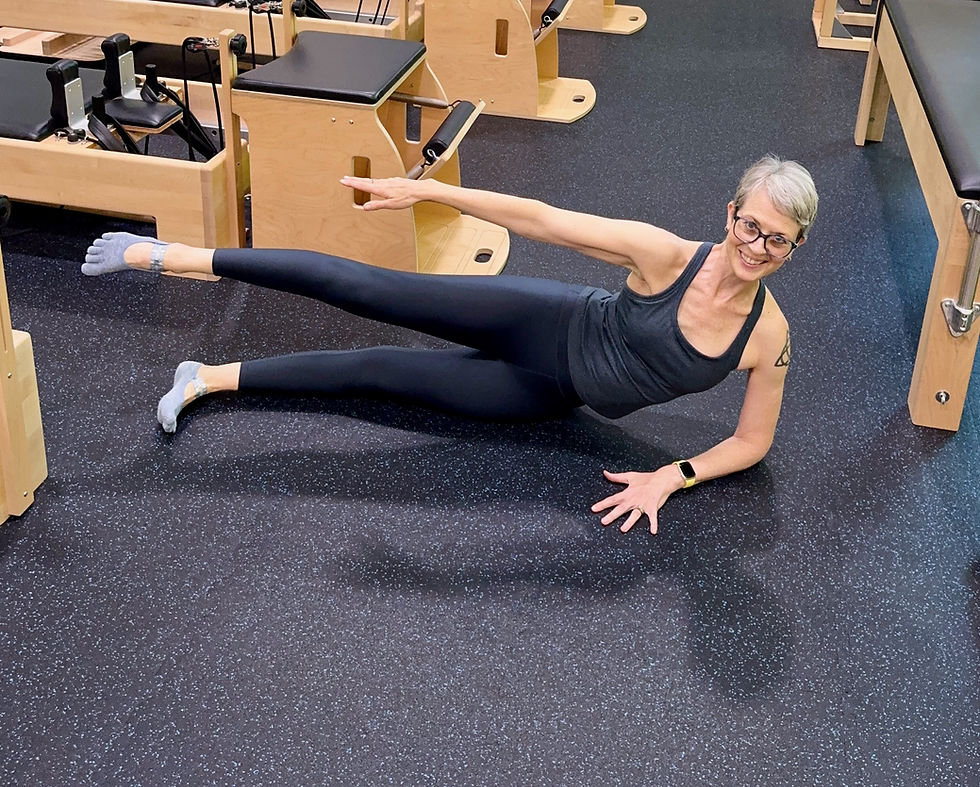
March is all about the Mat.
The Mat is the foundation of the entire Pilates system. It asks you to generate strength without springs, control without assistance, and clarity without distraction. It builds true movement literacy.
And it’s beautifully accessible — all you need is your body and a mat.
This month, I’m featuring Mat work all month long on Instagram as part of #MarchMatness, exploring how foundational exercises continue to challenge, refine, and reveal new layers of understanding — no matter how long you’ve been practicing.
If you’re following along, I’d love to know:
What’s one Mat exercise that always challenges you?
(You can message me — I may feature it this month.)
If you’d like to practice at home, you can explore my full library of free Mat classes on my YouTube channel, including beginner, intermediate, and focused sessions designed to build strength, coordination, and control.
The Power of the Mat
The Mat never hides your habits.
Without springs or external feedback, you must organize your own body in space. The Mat develops internal feedback systems — breath awareness, spinal organization, limb differentiation — that transfer across the entire Pilates system and into daily life.
It is honest work.And that’s exactly why it works.
This principle-based foundation reflects my broader philosophy of movement literacy in Pilates — learning not just what to do, but how and why you’re doing it.
Why Pilates Matters in Dance Training
Pilates has long been valued within the dance world for its ability to support both performance and longevity.
Dancers operate at the intersection of strength, precision, mobility, and artistry. Pilates provides a framework that helps dancers develop the control and organization needed to move efficiently while reducing unnecessary strain.
Through the Mat work in particular, dancers learn to:
• Develop deep core support for spinal stability
• Improve pelvic and hip organization during complex movement
• Coordinate breath with dynamic motion
• Build strength without excessive muscular bulk
• Increase body awareness and movement precision
These skills directly translate into dance technique. When the trunk is well-supported and the limbs move with clarity and control, dancers can access greater range, power, and expression without compromising joint health.
Pilates also helps address common movement challenges dancers face—such as over-reliance on mobility without sufficient stability, or global effort without clear muscular sequencing. By refining neuromuscular coordination and emphasizing efficient alignment, Pilates helps dancers build resilience alongside virtuosity.
For dancers, Pilates is not simply conditioning—it is movement education.
From the Studio to Lincoln Center
I’m always committed to deepening my practice and continuing to learn.
This month, I’ll be heading to New York City for Balanced Body’s Pilates on Tour at the iconic Lincoln Center.
The theme of the tour is Pilates for Dance — a meaningful intersection of two worlds I deeply love. As a dancer, educator, and movement professional, I’m continually inspired by how Pilates supports technical clarity, injury resilience, and expressive freedom.
There is nothing more energizing than being in a room full of master teachers and passionate professionals — sharing ideas, refining skills, and expanding our understanding of the work.
If you’ll be there, please come say hello.
Teacher Training Opportunities
If teaching is part of your vision — or if refining your understanding is your next step — March offers powerful opportunities to deepen your education.
I’m honored to partner with Remedy Movement, a Balanced Body Authorized Training Center in Raleigh, to offer industry-leading Pilates teacher training rooted in clarity, anatomy, and applied movement principles.
ONLINE
Anatomy for Movement Professionals
March 20–22
This course fulfills the required anatomy component for Balanced Body Certification.
We explore:
The musculoskeletal system
Planes of movement
Joint mechanics
Common pathologies
And most importantly, how to apply anatomy directly to your Pilates teaching
Only two spots remain.
This course is often the difference between memorizing terminology and truly understanding what you’re seeing in front of you as a teacher.
IN-PERSON
Mat 1
March 28–29 Remedy Movement – Raleigh
This is the first module in the Balanced Body Mat Certification pathway.
Strong teachers are built on strong foundations.Mat 1 is where that foundation begins. There are only 7 spots remaining!
Practice With Me
Looking for something you can do today?
Here’s a focused, under-14-minute beginner–intermediate Mat session designed to build strength, coordination, and control. Watch it here.
The Mat never lies — and that’s exactly why it works.
Closing Thoughts
March tends to build momentum — especially during March Matness. It’s a month that reminds us that the foundation matters.
Clarity.Discipline.Curiosity.And yes… a little bit of sweat.
If teacher training is on your 2026 vision board, this is the time to act.
Wishing you a March filled with strong foundations and inspired movement.
Yours in movement,
Lauren


Comments